
Capacity Before Expectation: Meeting Yourself Where You Are
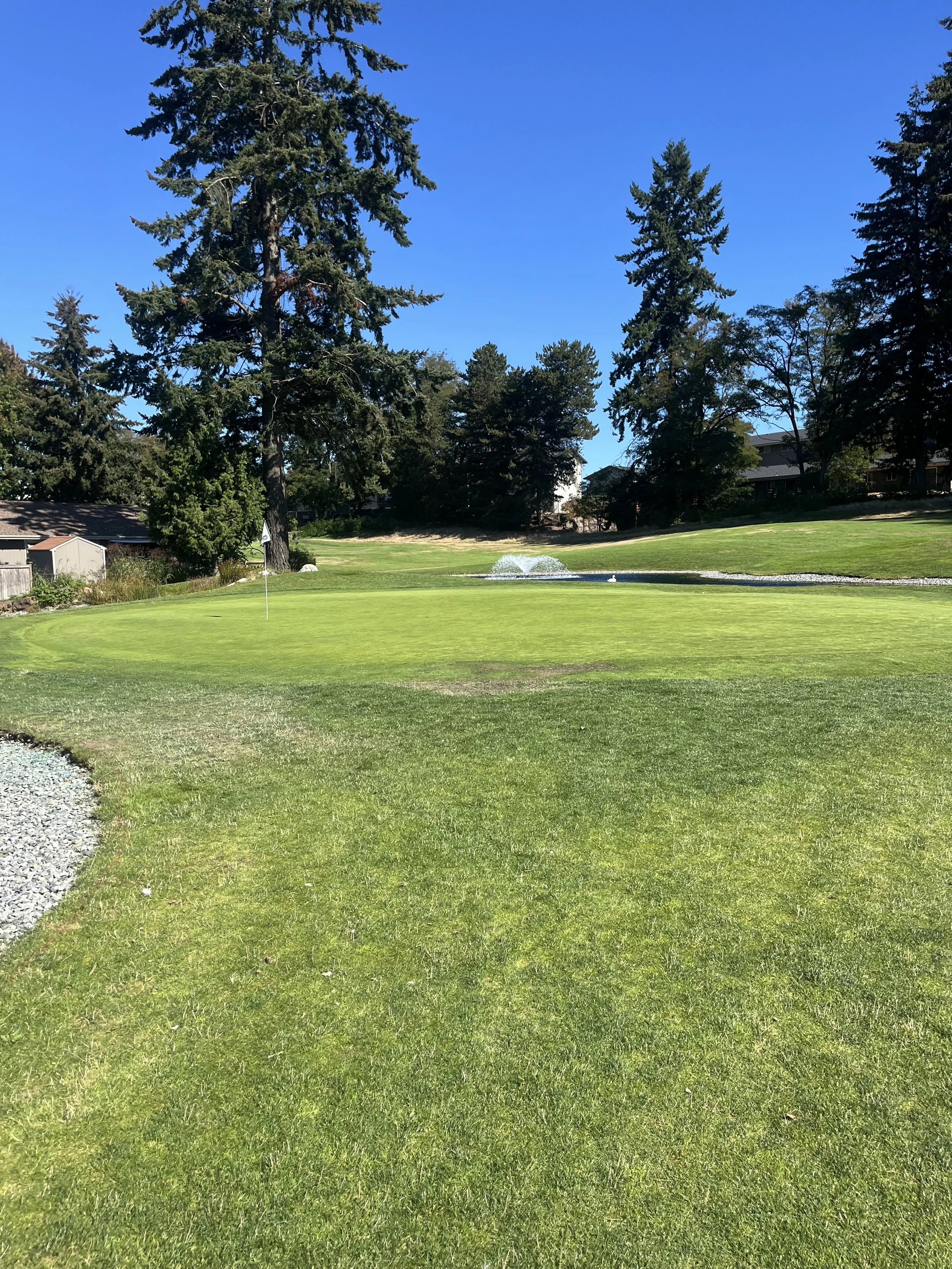
I had an epiphany on the golf course the other day, and it really wasn't about golf.
I had a full day of clients, but Hannah had the day off, and my last client finished at 2:30. Naturally, I thought making a 2:48 tee time at our local par-three course was a perfectly reasonable idea. I wrapped up work, realized I hadn't eaten lunch, drank about half a protein drink, ate a cheese stick and an Uncrustable, drove to the course, checked us in, got Hannah situated, changed my shoes, grabbed my clubs, and basically walked straight onto the first tee. Within five minutes of arriving, I was hitting a golf ball.
No warm-up. No putting or chipping. Not much food or hydration. No real transition from a full day of work into playing golf. On top of that, I'd played 18 holes Saturday, spent Sunday supporting our cyclocross team, pre-riding, being on my feet all day, and helping tear down the course afterward.
My body was toast… and yet, for some reason, I expected myself to play “good” golf.
When I didn't, I started getting frustrated. I know this course. I've played really well there. So every bad shot came with a little extra judgment:
I should be doing better than this.
There were also people behind us, and I wanted Hannah to feel comfortable and not rushed as a newer golfer. Instead, I started feeling responsible for keeping us ahead of them. Now I wasn't just playing golf. I was thinking about my score, the people behind us, our pace, whether Hannah was having fun, the balls I was losing, and how much better I thought I should be playing.
Eventually I more or less gave up. I grabbed my pitching wedge, walked up to the ball, hit it, walked to it, and hit it again. And suddenly golf got really easy. Not because I magically started playing incredible golf. I stopped asking the round to be something it wasn't.
That was when it hit me: I would never coach one of my athletes this way.
If one of my cyclists or runners told me, “I worked all day, barely ate lunch, didn't hydrate, had a huge training weekend, rushed directly into my workout without warming up, and my intervals sucked,” I wouldn't tell them they suddenly lost all their fitness.
I'd want context.
How did you sleep?
Have you eaten and hydrated?
What have you done over the last 24–48 hours?
How does your body feel?
How stressful was your day?
Did you have time to transition and warm up?
What else is occupying your attention right now?
None of those things are excuses. They're context.
Today's performance isn't simply a measurement of your ability. It's an expression of your ability through today's available capacity.
That distinction has stuck with me: capability and capacity aren't the same thing.
Capability is what I know I can do. Capacity is what I have available to do it right now.
I've played this course well before. I've handled harder days at work. I've been incredibly patient with my kids. I've completed harder workouts. I've managed busy schedules and still had energy left at the end of the day. That doesn't mean I have the same resources available every time I encounter those things.
And once I started thinking about it that way, I started seeing it everywhere.
Maybe I'm capable of being incredibly patient as a parent, but tonight I've worked all day, haven't eaten, the house is a mess, someone can't find their shoes, and somebody remembers at 8:47 PM that they need something for school tomorrow. Recognizing that my capacity is low doesn't give me permission to be an asshole. It gives me information I can use before I become one. Maybe tonight isn't the night for the big life lesson. Maybe we simplify. Maybe something waits until tomorrow. Maybe I recognize that my fuse is shorter and create a little more space before I respond.
The same thing happens at work. Some days I can tackle a complicated project, answer emails, solve problems, create something new, and still have plenty left. Other days the same workload feels enormous. Instead of immediately deciding that I'm lazy, unproductive, or falling behind, I can ask, What's influencing my capacity today? Then I can decide what actually needs my best attention, what can be simplified, and what can wait.
And this is already how I approach training. The workout on the calendar is a plan, not a commandment. If the athlete who arrives today isn't the athlete we expected when we wrote the workout, we adjust the workout. Sometimes we push. Sometimes we shorten it. Sometimes we change the intensity. Sometimes we recover.
The adjustment isn't a failure of the plan. The adjustment is part of the plan.
The funny thing is that Hannah and I decided to play another nine that afternoon. By then we'd eaten a little more, warmed up, settled into being at the course, and stopped rushing. The course also got incredibly slow. We eventually joined up with the single golfer behind us, then another person caught us and joined too. Meanwhile, the twosome ahead of us was taking forever. And I wasn't particularly bothered by it anymore.
At one point I told the guys I was playing with that when somebody is driving strangely slowly, I try to imagine that maybe they have a fish tank in the back or a hot plate of spaghetti sitting on the passenger seat. I don't know what's going on over there. Maybe these guys were brand new to golf. Maybe they were frustrated. Maybe they were having the greatest afternoon they'd had in months. Either way, we were outside playing golf. We'd survive.
The circumstances hadn't necessarily gotten better, but my relationship with them had changed. I had stopped desperately trying to force the afternoon into the shape I thought it was supposed to have. That's the question I've started carrying beyond the golf course:
Given what I'm bringing into this moment, what kind of day is this?
Maybe it's a performance day. I'm rested, fueled, present, and prepared. Great. Let's see what I've got.
Maybe it's a practice day. I'm not at 100%, but there's still plenty here to work with and learn from.
Maybe it's a play day. I don't need to accomplish anything. I can experiment, spend time with people I care about, and enjoy doing something simply because I enjoy doing it.
And sometimes it's a reset day. The expectations I brought into today clearly don't match the capacity I actually have, so I renegotiate.
We create expectations before we have all the information, and then reality arrives. Your kid melts down. The meeting runs long. Our legs are tired. Traffic happens. Someone needs us. We don't sleep well. We forget lunch. The golf course backs up. Instead of updating the plan with this new information, we often cling harder to the original expectation and then judge ourselves for failing to meet an expectation created for circumstances that no longer exist.
There is another option.
Take inventory. What is influencing my capacity right now? Sleep, food, hydration, fatigue, stress, preparation, time, attention, relationships, responsibilities. All of it matters. Then ask:
What does this moment actually need from me?
Adjusting doesn't mean giving up. It doesn't mean standards don't matter or that everything difficult should be avoided. It means making the best decision you can with an honest understanding of what you have available today.
Sometimes that means chasing the goal. Sometimes it means changing the workout. Sometimes it means being more patient with your kids. Sometimes it means putting the email away until tomorrow.
And sometimes it means grabbing your pitching wedge, walking up to the ball, hitting it, and seeing where it goes.
Capacity before expectation.
That's not giving up on performance. It's learning how to work with the human who has to produce it. YOU!